
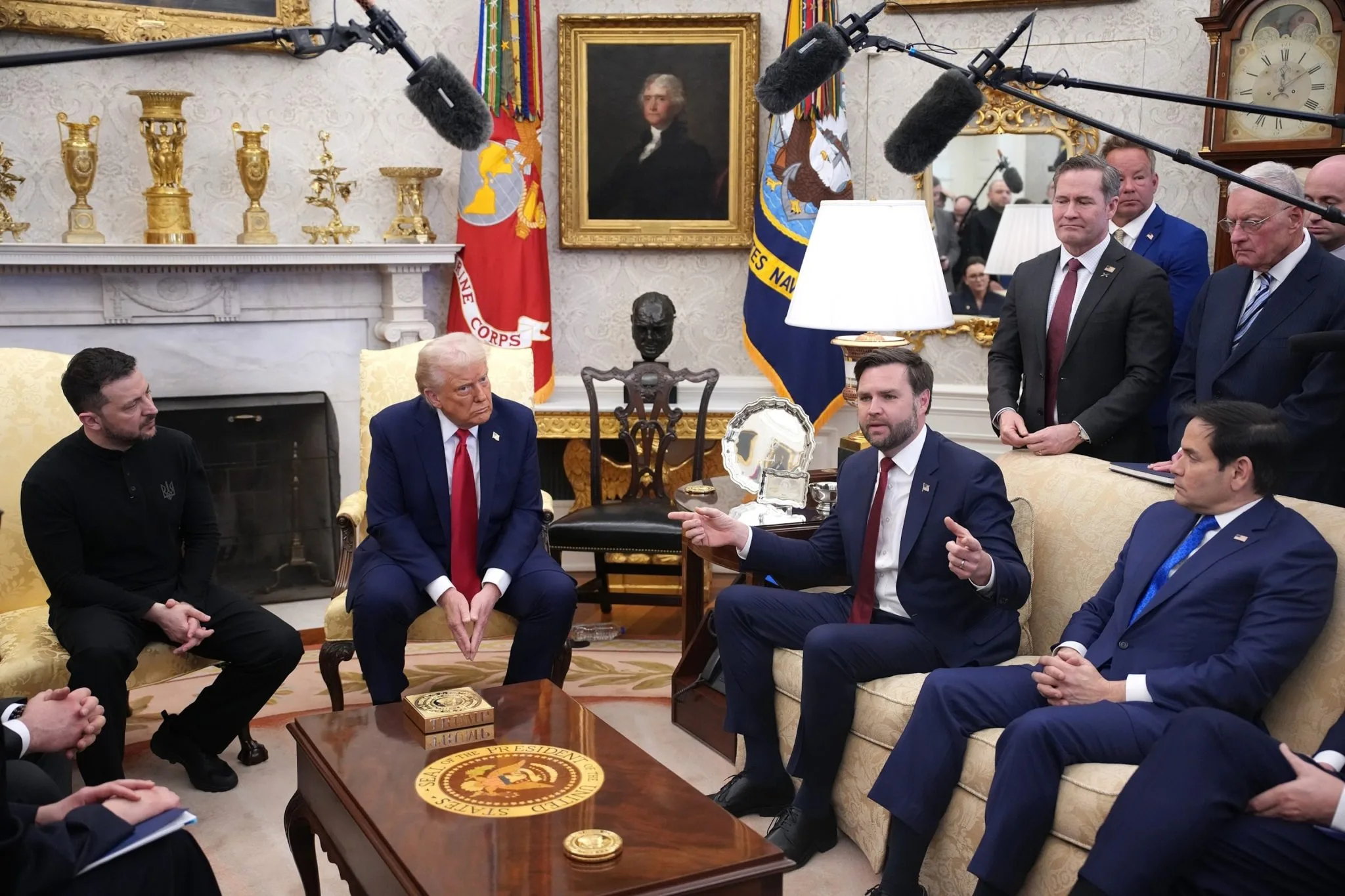
A heated standoff unfolded in the Oval Office as former U.S. President Donald Trump and Ukrainian President Volodymyr Zelensky clashed over the future of American support for Kyiv. The confrontation, marked by raised voices and sharp exchanges, saw Trump accuse Zelensky of lacking gratitude, even suggesting that the U.S. could withdraw its support for Ukraine altogether. Vice President JD Vance echoed the frustration, questioning Zelensky’s commitment to securing peace with Russia. The meeting ended abruptly, leaving Zelensky visibly shaken and without a signed agreement on U.S. access to Ukraine’s rare earth minerals.
Trump, flanked by top advisors, later dismissed further negotiations, asserting that Zelensky was “not in a place to negotiate.” Unlike standard diplomatic visits, there was no shared meal, and a planned joint press conference was canceled. The tense encounter underscored the dramatic shift in U.S. foreign policy, with the Trump administration signaling a tougher stance on Ukraine’s reliance on American support. Meanwhile, allies like Senator Lindsey Graham were deployed to frame the confrontation as a moment of strength, urging Zelensky to apologize for his approach.
As Zelensky departed Washington, uncertainty loomed over his leadership and Ukraine’s future. Trump, in a bold closing statement, declared that the Ukrainian leader would not be welcomed back until he was “ready for peace.” The fiery exchange not only exposed a widening rift between the two leaders but also raised critical questions about the direction of U.S. policy in the ongoing Russia-Ukraine conflict.